Journal of Korean Society of Dental Hygiene Open access, Peer Reviewed
pISSN 2287-1705, eISSN 2288-2294
Weeks in Review
Weeks to Publication
Journal of Korean Society of Dental Hygiene Open access, Peer Reviewed
pISSN 2287-1705, eISSN 2288-2294
Sang-Eun Moon1 , Jong-Hwa Jang2, Young-Eun Lee3, Kyeong-Hee Lee4, Yun-Jeong Kim1, Sun-Hwa Hong5, Sun-Mi Kim6, Seon-Ju Sim7, Hye-Sook Choi8, Yun-Sook Jung9, Seung-Hun Lee10, Myung-Ok Ha11, Jae-Young Lee2, Da-Hyun Lee12, Jeong-Min Seong13, Ji-Hye Kim14
1Department of Dental Hygiene, Kwangju Women’s University
2Department of Dental Hygiene, College of Health Science, Dankook University
3Department of Dental Hygiene, Daegu Health College
4Department of Dental Hygiene, Shinhan University
5Department of Dental Hygiene, Chunnam Techno University
6Department of Dental Hygiene, Wonkwang Health Science University
7Department of Dental Hygiene, Baekseok University
8Department of Dental Technology, Kyungdong University
9Department of Dental Hygiene, College of Science & Technology, Kyungpook National University
10Department of Dental Hygiene, Sahmyook Health University
11Department of Dental Hygiene, Gwangju Health University
12Department of Dental Hygiene, Kyungbuk College
13Department of Dental Hygiene, Kangwon National University
14Department of Preventive Dentistry, School of Dentistry, Kyungpook National University
Correspondence to Young-Eun Lee, Department of Dental Hygiene, Daegu Health College, 15 Youngsong-ro, Buc-gu Daegu-si, 41453, Korea. Tel: +82-53-320-1337, Fax: +82-53-320-1340, E-mail: yelee@dhc.ac.kr
Volume 25, Number 6, Pages 509-19, December 2025.
J Korean Soc Dent Hyg 2025;25(6):509-19. https://doi.org/10.13065/jksdh.2025.25.6.5
Received on November 12, 2025, Revised on November 26, 2025, Accepted on December 02, 2025, Published on December 30, 2025.
Copyright © 2025 Journal of Korean Society of Dental Hygiene.
This is an Open Access article distributed under the terms of the Creative Commons Attribution Non-Commercial License(http://creativecommons.org/licenses/by-nc/4.0).

Objectives: To determine the Korean Society of Dental Hygiene (KSDH) future-oriented development strategies using member surveys and word cloud analysis. Methods: A survey of 122 members was conducted online to assess awareness of the association’s vision, satisfaction with its operations, and level of participation. In addition, personalized service needs and perceptions of digital transformation were identified. Results: The association’s core values were recognized by 73.8% of the respondents, customized services were supported by 77.1%, and the requirement to expand the digital platform was emphasized by 95.0%. Word cloud analysis revealed four key strategic areas: education and professional competency; member benefits; communication and networking; and promotion of participation. Conclusions: The findings suggest that improving digital transformation, personalized services, internal communication, and subcommittee activities could inform strategies to enhance the operations and member engagement of the KSDH.
Association development strategy, Korean Society of Dental Hygiene (KSDH), Member engagement, Word cloud analysis
The Korean Society of Dental Hygiene (KSDH) is celebrating its 24th anniversary this year, having established itself as a leading organization in the advancement of dental hygiene. However, in response to recent digital transformations and the rapid evolution of social and technological environments, the society’s traditional operational methods have demonstrated limitations in expanding member engagement, enhancing educational and research competitiveness, and reinforcing its international presence [1,2]. Therefore, it is essential for the society to proactively adapt to these dynamic changes and implement sustainable development strategies to foster a progressive organizational identity.
In the strategy formulation process, it is essential to first clearly articulate the society’s vision, mission, and core values. Kotter [3] emphasized the importance of a well-defined organizational vision and mission, noting their crucial role in motivating members, building trust with external stakeholders, guiding strategic direction, and enabling phased change management. Additionally, Timotheou et al. [4] argued that digital transformation is vital for advancing academic research, enhancing access to information, improving educational and learning environments, strengthening member services and networks, and innovating methods of journal publication and information dissemination. Digital transformation involves the adoption of digital technologies to fundamentally reshape organizational operations, service delivery, and approaches to research and education. Academic societies can proactively leverage information and communication technologies across multiple areas, including academic research, member management, curriculum development, journal publishing, and the organization of online academic conferences.
Christensen et al. [5] and Santamoto et al. [6] have demonstrated that student-centered learning approaches, the integration of artificial intelligence (AI) and big data analytics, interdisciplinary collaboration, and partnerships between industry and academia, supported by conducive policy frameworks, collectively enhance educational effectiveness and research competitiveness. Therefore, the academic community must address the limitations inherent in traditional educational and research methodologies by developing innovative programs that utilize advanced technologies and modern pedagogical strategies.
International collaboration is increasingly acknowledged as a vital strategy for advancing global competitiveness in the field of dental hygiene. The Korean Society of Dental Hygiene can achieve qualitative improvements in both the discipline and its practical applications on an international level by promoting research, education, and policy development through partnerships with foreign academic institutions, researchers, and healthcare organizations [7]. Key approaches such as facilitating international joint research initiatives, expanding academic exchanges, standardizing educational frameworks, and establishing global networks are essential for enhancing the academy’s international standing and fostering increased participation from international scholars.
In addition, implementing customized membership management systems, consistent feedback mechanisms, online communities, and expanded opportunities for participation in seminars and conferences is crucial to fostering active engagement in scholarly and educational activities. These combined efforts align with global academic trends and reflect the pathways emphasized by leading professional organizations, underscoring the importance of strengthening international cooperation and member-centered engagement strategies for sustainable development [8–10].
In conclusion, it is essential to develop strategies based on the environmental, social, and governance (ESG) framework to advance the sustainable development of the academic community. Sustainable development is defined as development that meets the needs of the present without compromising the ability of future generations to meet their own needs [11], and it should be evaluated across three dimensions: economic, social, and environmental [8]. Sterman et al. [12] have proposed several approaches, including the adoption of environmentally sustainable policies, the reduction of carbon emissions associated with academic conferences through the implementation of online and hybrid formats, the promotion of digitization for journals and research materials, the enhancement of social responsibility, the improvement of community oral health, the expansion of international cooperation in oral health, the assurance of economic sustainability, and the maintenance of long-term financial stability for society membership and educational programs. The Korean Society of Dental Hygiene may also utilize these strategies to promote research, education, and policy initiatives in a balanced manner across environmental, social, and economic domains. By integrating digital technologies, fostering global collaboration, and implementing member-centered management systems, the society can establish a sustainable academic foundation that will benefit future generations.
This research sought to establish a forward-looking identity for the Korean Society of Dental Hygiene and to investigate strategies conducive to its sustainable growth. A survey conducted among members assessed their perceptions and requirements across critical domains, including organizational management, education and research, international collaboration, digital transformation, and member services. Drawing upon the results, the study offers specific mid- to long-term strategic recommendations aimed at fostering development and strengthening member participation.
This study employed member survey data collected through the Korean Society of Dental Hygiene’s policy initiative titled ‘Suggestions for Establishing a Future-Oriented Identity of the Association.’ All data collection procedures were granted exemption approval by the Institutional Review Board of Daegu Health College (DHCIRB-2024-12-0016). Prior to survey administration, the study objectives were clearly communicated to participants. Between March 1 and April 11, 2025, members of the Korean Society of Dental Hygiene voluntarily completed an online self-administered questionnaire. The sample size was calculated using G*power version 3.1.9.7, with parameters set at an effect size of 0.30 for descriptive statistics and text mining-based word cloud analysis, a significance level of 0.05, and statistical power of 0.95. This calculation indicated a minimum required sample size of 145 participants to ensure analytical robustness and representativeness. Although 135 members initially responded, 13 respondents were excluded due to incomplete responses, resulting in a final sample of 122 participants. Despite this final number being below the predetermined threshold, the exclusion of data with low response reliability was necessary to preserve the integrity and validity of the text miningbased word cloud analysis, which requires stringent quality control of textual data.
The questionnaire was developed based on Kotter’s change model [3] and the research instruments of the International Federation of Dental Hygienists (IFDH) [13]. Kotter’s change model, which provides a sequential framework for organizational change, was utilized to design survey items addressing strategic elements such as vision, participation, and change management within this study. The IFDH research tools were employed to identify key issues relevant to both the academic and practical aspects of dental hygiene from a global perspective. To ensure content validity in accordance with the study’s objectives—including the association’s vision, operational satisfaction, participation, awareness of digital transformation, and demand for tailored services—consultations were conducted with two dental hygiene professors with expertise in qualitative research. The finalized questionnaire comprised 21 items, including 14 multiple-choice questions and 7 open-ended questions. Among the multiple-choice items, 3 were dichotomous (yes/no), 10 utilized a 5-point Likert scale (ranging from strongly agree to strongly disagree), and 1 was a four-option multiple-choice question. The reliability of the instrument was confirmed with a Cronbach’s alpha of 0.840.
The collected data were analyzed by categorizing responses into multiple-choice and open-ended question types, with results presented separately for each category. For the multiple-choice questions, the frequency and distribution of each response option were calculated. Concerning the 5-point Likert scale items, responses were consolidated to facilitate analysis: ‘strongly agree’ and ‘agree’ were combined into a positive category (agree), ‘neutral’ responses were maintained as a separate category, and ‘disagree’ and ‘strongly disagree’ were merged into a negative category (disagree), thereby establishing a three-tiered analytical framework.
The open-ended responses were analyzed qualitatively using the word cloud generator tool (https://wordcloud.kr/). Initially, the raw free-response data underwent preprocessing, which included the removal of duplicate entries, correction of typographical errors, and elimination of stop words. Subsequently, the data were refined by extracting significant nouns and concise phrases. Keywords were then identified based on their frequency of occurrence for each question, and semantically related keywords were grouped to form secondary keywords. For each question, word clouds were generated to visually emphasize keywords with higher frequencies by varying font size according to their occurrence rates. Additionally, visual elements such as color, font style, and spatial arrangement were utilized to intuitively represent relationships among keywords and to highlight prominent conceptual clusters.
As of 2025, the response rate was 18.6%, based on a total membership of 724 individuals. The study sample included members actively engaged across several geographic regions, namely the metropolitan area, the Yeongnam region, and the Honam region. In terms of professional roles, participants comprised clinical dental hygienists working in hospitals and clinics, as well as professors and researchers involved in academic and research activities at universities and research institutions.
Given the dichotomous nature of the responses, 73.8% of participants recognized the society’s vision, mission, and core values, indicating that the majority were aware of the organization’s fundamental direction. However, 26.2% lacked this awareness, highlighting the necessity to enhance communication efforts in the future. Regarding considerations for clarifying policies, the majority of respondents (55.7%) answered ‘no,’ underscoring the need for more explicit guidance. Additionally, the recognition rate of the mid- to long-term development plan was notably low at 30.3%, emphasizing the critical need for improved dissemination and promotion of strategic initiatives <Table 1>.
Utilizing a 5-point Likert scale, over 80.3% of respondents expressed a positive evaluation of the society’s goal orientation. Satisfaction with the member management system was reported by 77.9% of participants; however, 19.7% remained neutral, suggesting potential areas for enhancement. Positive responses regarding member participation in activities accounted for only 28.7%, whereas 30.3% responded negatively, underscoring the necessity to increase member engagement. Concerning customized services, 77.1% of respondents acknowledged their importance, and a substantial majority (95.0%) emphasized the significance of expanding digital platforms. Satisfaction with existing services was positively rated by 66.4% of participants, while 87.7% recognized the imperative for digital transformation. Member recruitment strategies received 42.6% positive and 50.0% neutral responses, indicating a need for qualitative improvements. More than half of the respondents (63.9%) perceived society activities as positively contributing to recruitment efforts, with some expressing neutrality. Lastly, 77.9% of participants positively evaluated the contribution of subcommittee activities to the society’s development, reflecting their tangible impact on organizational progress <Table 2>.
Overall, members exhibit a clear recognition of the core values and objectives of the society, alongside heightened expectations for personalized services and digital transformation initiatives. However, actual participation rates in society activities remain low, highlighting the need for improved member engagement and the implementation of effective strategies. Additionally, the preferred categories of personalized services among members are ranked as follows: educational materials (45.9%), research support (34.4%), and networking opportunities (18.9%), indicating a predominant interest in services that meaningfully enhance their academic competencies <Fig. 1>.
Table 1. Results of binary response questions [Unit: N(%)]
| Survey questions | Yes | No |
|---|---|---|
| Awareness of the society’s vision, mission, and core values | 90(73.8) | 32(26.2) |
| Presence of considerations for policy clarification | 54(44.3) | 68(55.7) |
| Awareness of mid- to long-term development plans | 37(30.3) | 85(69.7) |
Table 2. Results of multiple-choice questions [Unit: N(%)]
| Survey questions | Agree | Neutral | Disagree |
|---|---|---|---|
| Clarity and goal-oriented nature of the society’s objectives | 98(80.3) | 20(16.4) | 4(3.3) |
| Satisfaction with the member management system | 95(77.9) | 24(19.7) | 3(2.4) |
| Level of participation in member activities | 35(28.7) | 50(41.0) | 37(30.3) |
| Perceived need for customized services | 94(77.1) | 27(22.1) | 1(0.8) |
| Perceived importance of expanding digital platforms | 116(95) | 6(4.9) | 0(0.0) |
| Satisfaction with current services | 81(66.4) | 34(27.9) | 7(5.7) |
| Perceived need for digital transformation | 107(87.7) | 15(12.3) | 0(0.0) |
| Satisfaction with member recruitment strategies | 52(42.6) | 61(50.0) | 9(7.4) |
| Perceived contribution of society activities to member recruitment | 78(63.9) | 36(29.5) | 8(6.6) |
| Perceived contribution of subcommittee activities to development | 95(77.9) | 21(17.2) | 6(4.9) |
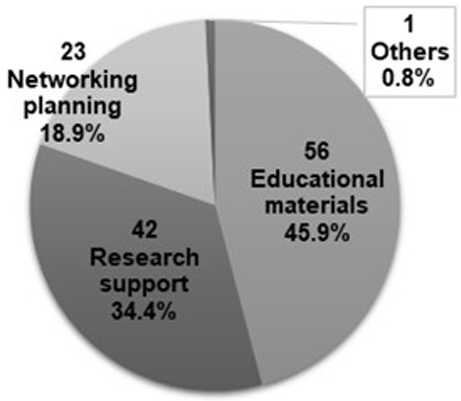
Fig. 1. Results of the survey on preferred customized service types among members
The analysis of seven open-ended questions using word cloud methodology identified twenty prominent keywords for each question. These keywords were then categorized into related conceptual groups, resulting in the identification of four strategic domains: education and professional development, member benefits and management, enhancement of communication and networking, and strategies for promoting participation and publicity <Fig. 2, Table 3>.
To stimulate member engagement, key factors identified included the promotion of education and professional development, encouragement of participation, provision of member benefits, and enhancement of accessibility. Strategies aimed at improving member retention encompassed the reinforcement of educational offerings and expertise, optimization of member benefits and management, augmentation of communication and networking opportunities, as well as the implementation of participation incentives and promotional initiatives. Furthermore, essential strategies for the advancement of the society were delineated as bolstering academic competitiveness, expanding digital accessibility, fostering member-centered communication and involvement, and pursuing strategic operations alongside policy-driven growth. Future strategic recommendations emphasized the development of tailored education and research programs, the expansion of digital platforms, diversification of member participation and services, and the reinforcement of social contribution efforts. In terms of new member recruitment, identified needs included broadening participation bases, delivering education- and career-oriented content, enhancing digital accessibility, and incorporating branding and incentive mechanisms. Concerning members’ willingness to engage in additional activities, there was a pronounced demand for practice- and clinically focused programs, sustained academic and educational involvement, strengthened communication and participatory initiatives, and activities aligned with future competencies and policy considerations. Lastly, to enhance subcommittee functions, the necessity for diversifying operational approaches, improving member accessibility, fostering collaboration and networking, increasing promotion and awareness, and expanding structural support was affirmed <Fig. 2, Table 3>.
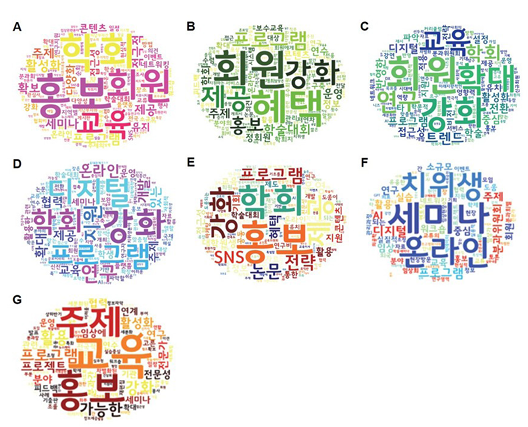
Fig. 2. Word cloud analysis of survey responses. Word size indicates frequency of occurrence; color differentiates conceptual categories. Panels A–G represent the following categories; A: necessary elements for member activity enhancement, B: strategies for improving member retention, C: key strategies for society development, D: opinions for future strategic proposals, E: strategies for attracting new members, F: willingness to participate in additional activities, G: suggestions for improving committee activities
Table 3. Thematic keywords derived from open-ended responses
| Survey questions | Consolidated keywords |
|---|---|
| Necessary elements for member activity enhancement |
Communication/promotion, education/professional development, participation/incentives, accessibility improvement |
| Strategies for improving member retention | Education/professional development, member benefits & management, communication & networking, participation & promotion strategy |
| Key strategies for society development | Education/academic competitiveness, digital accessibility, member-centered communication & engagement, strategic management & policy expansion |
| Opinions for future strategic proposals | Education & research competitiveness, digital expansion & accessibility, member engagement & service diversification, strategic management & social contribution |
| Strategies for attracting new members | Participation expansion, education & career-oriented content, digital accessibility, branding & strategic promotion, incentives |
| Willingness to participate in additional activities |
Practice & clinical programs, sustainable academic & educational participation, communication & participatory activities, future skills & policy-linked activities |
| Suggestions for improving committee activities |
Diverse operations & expertise, member participation & accessibility, collaboration & networking, promotion & awareness, structural support |
This study investigated the perceptions and needs of members of the Korean Society of Dental Hygiene across various dimensions, including the association’s vision and mission, operational processes, member management, service satisfaction, participation levels, and awareness of digital transformation. Data were collected via a survey administered to association members and analyzed using word cloud methodologies.
The analysis indicated that 73.8% of respondents are familiar with the society’s vision, mission, and core values, while 80.3% consider the society’s goals to be meaningful. However, only 44.3% reported that there are clear guidelines for policy clarification, and awareness of mid- to long-term development plans was considerably low at 30.3%. Mustafai et al. [14] highlight the importance of disseminating an organization’s vision and strategy to enhance members’ understanding and engagement, emphasizing the critical role of effective internal communication in this process. These findings suggest that the society should enhance the clarity of its strategic direction and communication regarding mid- to long-term planning, as well as strengthen its internal communication framework.
In the assessment of the membership management system and the associated services, positive feedback was recorded at 77.9% and 66.4%, respectively, suggesting that a foundational level of trust in the academic society’s operational framework has been partially established. Nonetheless, actual member participation was predominantly rated as ‘average,’ with negative responses comprising 30.3%, indicating a generally low level of engagement. This pronounced discrepancy between the high recognition of the society’s vision and values and the comparatively low rate of active participation implies that the mere existence of the system and service provision is insufficient to effectively foster member involvement. As noted by Potnis et al. [15], critical determinants of member participation encompass knowledge sharing, trust building, and the creation of opportunities for engagement. Consequently, the observed low participation rate reflects an absence of an environment conducive to active member involvement and contribution, such as through information exchange and networking. This underscores the necessity for a strategic framework aimed at motivating members to proactively participate and establishing a practical setting that supports meaningful engagement.
Simultaneously, findings from Community Brands’ Member Engagement Study [16] demonstrate that personalized service strategies are instrumental in significantly increasing member engagement and cultivating a sense of belonging. In this study, 77.1% of respondents recognized the value of customized services, with the most preferred offerings being ‘educational materials’ (38.9%) and ‘research support’ (38.9%). These results highlight the necessity of establishing a tailored support framework that transcends simple information provision, effectively addressing members’ desires for professional growth and academic development.
Furthermore, 95.0% of respondents indicated that the expansion of digital platforms is ‘important,’ and 87.7% acknowledged the necessity of digital transformation positively. These findings suggest that enhancing digital infrastructure and expanding online content within academic societies is no longer optional but essential, consistent with the beneficial impacts of digital transformation reported in previous studies [14,15].
The positive feedback regarding the activities of the subcommittees indicates that these initiatives effectively enhance member engagement, professional development, and networking opportunities. Therefore, the association should prioritize organizational revitalization by expanding the roles of the subcommittees and strengthening strategies designed to promote member connectivity. This highlights the importance of moving beyond fundamental institutional management to create an environment and incentives that encourage active member participation.
The results of the word cloud analysis indicate that activating member engagement requires a focus on education and professional development, the encouragement of participation alongside the provision of benefits, and the enhancement of accessibility. To improve member retention rates, key factors identified include strengthening education and expertise, offering member benefits and effective management, improving communication and networking, and implementing participation incentives and promotional strategies. These findings correspond with those from the multiple-choice survey, in which members expressed a preference for customized services—such as educational resources and research support—and strategies that foster active participation. This convergence between survey data and open-ended responses highlights the importance of member-centered approaches. Concerning strategies for society development and new member recruitment, emphasis was placed on enhancing academic competitiveness, expanding digital accessibility, improving member-focused communication and engagement, broadening strategic operations and policy frameworks, and delivering tailored education and research programs. These priorities align with survey results that underscored the significance of digital platform expansion and personalized services. The consistent alignment between quantitative and qualitative data strongly suggests that the development of an integrated, data-driven, member-centric strategy is essential for the society’s sustainable growth and organizational revitalization.
In conclusion, the Korean Society of Dental Hygiene can establish a foundation for sustainable development by enhancing a member-centered operational framework through digital transformation, the provision of personalized services, improved internal communication, and the revitalization of subcommittees. This study is significant in that it comprehensively captured members’ perceptions and needs by employing both survey methodologies and word cloud analysis targeting the association’s membership. Quantitative data were collected via multiple-choice questions addressing various dimensions, including member management, service satisfaction, participation levels, and awareness of digital transformation initiatives. Moreover, by identifying membercentered strategic priorities through open-ended questions and word cloud analysis, the research provided practical insights for the association’s management and strategic planning. Notably, the consistency observed between the multiple-choice and open-ended responses reinforces the reliability and applicability of the findings.
The limitations of this study primarily stem from its exclusive reliance on data obtained from respondents, which may introduce bias by excluding the perspectives of non-participating members. Additionally, the use of a sample size below the recommended minimum threshold imposes statistical constraints. Some strategic areas are based on members’ subjective perceptions, highlighting the need for further validation during practical implementation. Future research should seek to increase the sample size to enable comparative analyses of perceptual differences among member groups and to conduct longitudinal studies assessing the policy effectiveness of the proposed strategies. Moreover, enhancing the validity of development strategies from an international perspective requires incorporating digital-based member data analysis and benchmarking against cases from overseas academic societies. Such follow-up investigations are expected to facilitate the development of evidence-based frameworks for strategy formulation and evaluation, thereby promoting a sustainable growth model.
This study integrates key terms identified via member surveys and word cloud analysis to propose strategic directions aimed at the mid- to long-term development and enhancement of member engagement within the Korean Society of Dental Hygiene. The following recommendations are presented:
1. There is an urgent need to improve the clarity and communication of the association’s vision, mid- to long-term strategic plans, and comprehensive policy frameworks.
2. To enhance member engagement, it is imperative to develop programs that meet members’ needs for advanced professional development and to broaden the range of tangible benefits provided to them.
3. Enhancing digital communication channels and content infrastructure is essential to improve the accessibility and usability of information, thereby establishing a foundation for future academic initiatives that utilize artificial intelligence (AI) and big data technologies.
4. It is essential to establish sustained communication and participatory mechanisms by activating subcommittees to ensure continuous member engagement.
5. Expanding customized educational and research support programs is essential for improving members’ expertise and satisfaction. Specifically, it is advisable to strengthen strategies that incorporate sustainable education and policy initiatives from an Environmental, Social, and Governance (ESG) perspective.
Collectively, these measures are expected to enable the association to develop evidence-based strategic planning and evaluation systems, thereby promoting the achievement of a sustainable growth model in the future.
Conceptualization: YE Lee, KH Lee, YJ Kim, SE Moon; Data collection: SH Hong, SM Kim, DH Lee, JM Seong; Formal analysis: YS Jung, SH Lee, JY Lee; Writing-original draft: MO Ha, SJ Sim, HS Choi, JH Kim; Writing-review&editing: YE Lee, YJ Kim, SE Moon, JH Jang
SE Moon, JH Jang, YE Lee, YJ Kim, YS Jung, and SH Lee are a member of the Editorial Committee of the Journal of the Korean Society of Dental Hygiene, but was not involved in the review process of this manuscript. The authors declare no other conflicts of interest.
This research was supported by the Foundation of the Korean Society of Dental Hygiene through its policy research program in 2024.
This study was approved by the Institutional Review Board (IRB) of Daegu Health College (IRB No. DHCIRB-2024-12-0016).
The data are held by the corresponding author and are available upon request if needed.
None.